


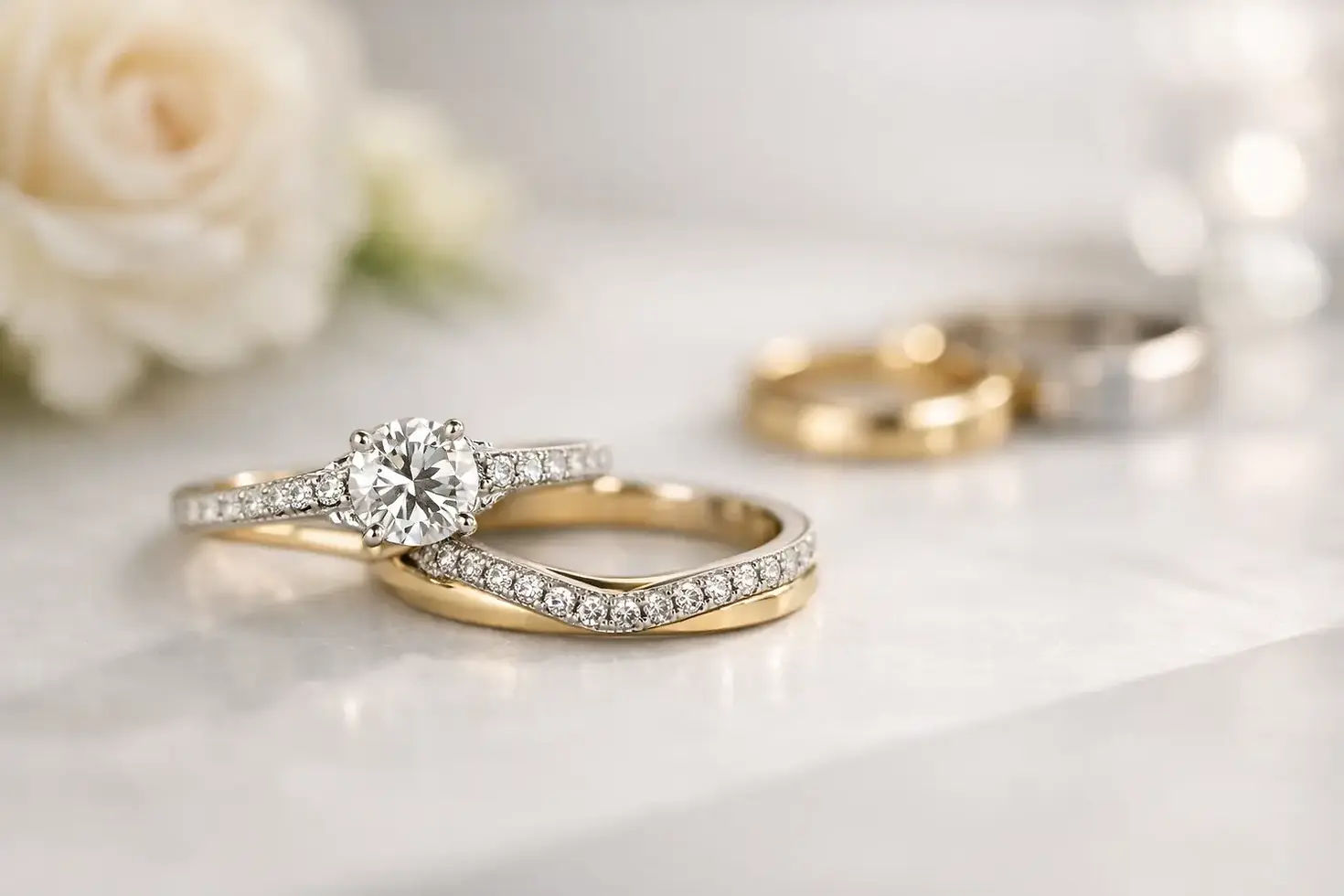
Engagement Rings and Wedding Bands That Fit Together

A beautiful ring stack should feel intentional the moment it slips on your finger. That is exactly why so many couples search for engagement rings and wedding bands that fit together - not just visually, but physically, comfortably, and in a way that honors the significance of both pieces.
When the pairing is right, the result looks polished from every angle. The engagement ring remains the focal point, the wedding band supports it without competing, and the two rings sit together as if they were always meant to be worn side by side. When the pairing is wrong, even an exquisite ring can feel awkward, with gaps, rubbing, uneven height, or a silhouette that looks disconnected.
Why engagement rings and wedding bands that fit together matter
This choice is about more than aesthetics. A well-matched bridal set affects daily comfort, long-term wear, and how luxurious your rings feel over time.
A wedding band that does not sit properly against an engagement ring can create friction between the two pieces. In some cases, that friction is minor and purely visual. In others, it can lead to extra wear on prongs, metal, or delicate detailing. The right fit helps protect craftsmanship while giving your hand a balanced, refined look.
There is also a style advantage. Engagement rings often feature elevated center stones, hidden halos, cathedral shoulders, or low-profile settings. Those details can make a standard straight band difficult to pair. Choosing a band designed to align with the ring creates a cleaner profile and a more elevated finish.
What “fit together” really means
For some buyers, a perfect fit means the two rings sit flush with no gap at all. For others, it means the pair looks harmonious even if a slight space remains between them. Neither approach is wrong. It depends on the design language you love and how you plan to wear the set.
A flush fit is often preferred by shoppers who want a sleek, cohesive bridal look. This is especially popular with solitaire and hidden halo designs that can accommodate a straight band. A contoured fit, on the other hand, is ideal when the engagement ring has a lower basket, larger side stones, or a shape that naturally requires a curved or notched band.
The best standard is not perfection on paper. It is whether the rings feel comfortable, secure, and visually intentional on your hand.
How the engagement ring setting shapes your band options
The setting is usually the deciding factor in whether a traditional wedding band will work. A high-set solitaire often offers the most flexibility because the center stone is lifted enough for a straight band to slide underneath. This creates the clean, close fit many brides want.
Low-set engagement rings can be more complex. They often sit closer to the finger, which gives them an elegant and practical profile, but that lower structure may block a straight band from resting flush. In that case, a curved wedding band or a custom contour is often the better choice.
Halo rings, three-stone designs, and vintage-inspired styles also deserve extra attention. Their wider silhouettes and decorative elements can limit the type of band that pairs naturally. That does not make them harder to style. It simply means the band should be chosen with the ring, not after it.
Popular settings and how they pair
Solitaire engagement rings are usually the easiest to match, especially if they are designed with enough clearance for a straight band. Hidden halo styles can also pair beautifully, though the exact fit depends on how low the halo sits.
Three-stone rings often need more planning because side stones can extend into the space where the band would sit. Oval, pear, marquise, and cushion shapes may require either a carefully selected straight band or a contoured one, depending on the basket design. More ornate rings, including vintage-inspired settings, frequently look best with bands shaped to follow their lines.
Choosing the right wedding band style
A straight wedding band remains the most classic option. It is timeless, versatile, and elegant on its own. If your engagement ring allows for it, this pairing creates a crisp, understated luxury that never feels overdone.
Curved wedding bands are designed to arc gently around the center setting. They can look soft and romantic while solving a practical fit issue. A V-shaped band is another strong option, especially for pointed center stones such as pear or marquise cuts.
Notched bands are more engineered in appearance, with a small opening that accommodates a specific part of the engagement ring. These can create an impressively precise fit, but they are often best for those who know they will wear that exact set together most of the time.
Eternity and half-eternity bands add brilliance, but they should be selected carefully. If the engagement ring is already highly detailed, a diamond-heavy band can either elevate the set or make it feel too visually busy. It depends on stone size, scale, and the overall balance on the hand.
Metal, profile, and detail should feel intentional
A strong pairing is not only about shape. Metal color, band thickness, and finishing details all influence whether the rings truly belong together.
Matching metals creates a unified look and often appeals to traditional buyers. White gold with white gold, yellow gold with yellow gold, and platinum with platinum will always feel cohesive. Mixed metals can be striking and modern, but they work best when the contrast feels deliberate rather than accidental.
Band profile matters just as much. A slim engagement ring with a very thick wedding band can feel top-heavy. A bold statement ring paired with an ultra-thin band may look visually incomplete. The proportions should support one another.
Texture also plays a role. High-polish bands deliver classic elegance, while milgrain, pavé, or engraved details add personality. If your engagement ring has vintage elements, repeating one subtle motif in the wedding band can make the set feel curated rather than simply matched.
Should you buy the set together?
In many cases, yes. Shopping for both rings at the same time is one of the easiest ways to avoid fit issues later.
When you choose the engagement ring first and wait months to shop for the band, you may discover that the shape limits your options more than expected. Buying together allows you to compare profiles, check spacing, and decide whether you want a flush fit, a contoured silhouette, or a custom solution.
This is especially valuable for shoppers considering bespoke design. A custom band can be crafted to follow the exact architecture of your engagement ring, creating a bridal set that feels exclusive and highly personal. For a luxury buyer, that level of precision often makes the final result feel more meaningful.
At AV Luxury Gems, this approach fits naturally with how modern couples shop. You can explore refined ready-to-ship styles or create a personalized pairing that reflects your taste, your lifestyle, and the way you want your rings to feel every day.
When custom design is the smartest option
Some engagement rings simply deserve a custom band. That is often true for unusual center stone shapes, low-profile settings, intricate side detailing, or heirloom-inspired designs.
A custom band is not only about aesthetics. It can solve practical issues that off-the-shelf bands cannot. If you want the rings to sit close without rubbing, match the exact width of the shank, or mirror a unique design detail, customization gives you far more control.
This route is also ideal if you want a stack that evolves over time. You may start with an engagement ring and wedding band, then add an anniversary band later. Designing with that future stack in mind helps maintain symmetry and visual harmony.
Common mistakes to avoid
One of the most common mistakes is assuming all rings with the same finger size will fit together well. Size and fit are not the same thing. The architecture of the setting matters just as much as the measurement.
Another mistake is focusing only on the top view. Rings may look beautiful from above but feel awkward from the side if one sits much higher than the other. Always consider how the pair aligns in profile.
It is also easy to overmatch. A wedding band does not need to copy every detail of the engagement ring. Sometimes a simpler band gives the center stone room to shine and makes the full set look more expensive.
Finally, think honestly about your lifestyle. If you work with your hands, prefer a lower-profile ring, or plan to wear the engagement ring alone at times, those habits should shape the design decision.
How to know you found the right pair
The right pair usually feels obvious once you try it on. The rings sit comfortably, the proportions make sense, and nothing feels forced. You are not distracted by a gap you did not want, a band that twists, or details that compete for attention.
Instead, the set looks composed. It reflects your style, supports daily wear, and feels worthy of the moment it represents. That is the real goal with engagement rings and wedding bands that fit together - not just matching jewelry, but a lasting expression of commitment designed with care.
Choose a pairing that flatters your hand, respects the craftsmanship of both rings, and feels just as beautiful years from now as it does on day one.


Comments